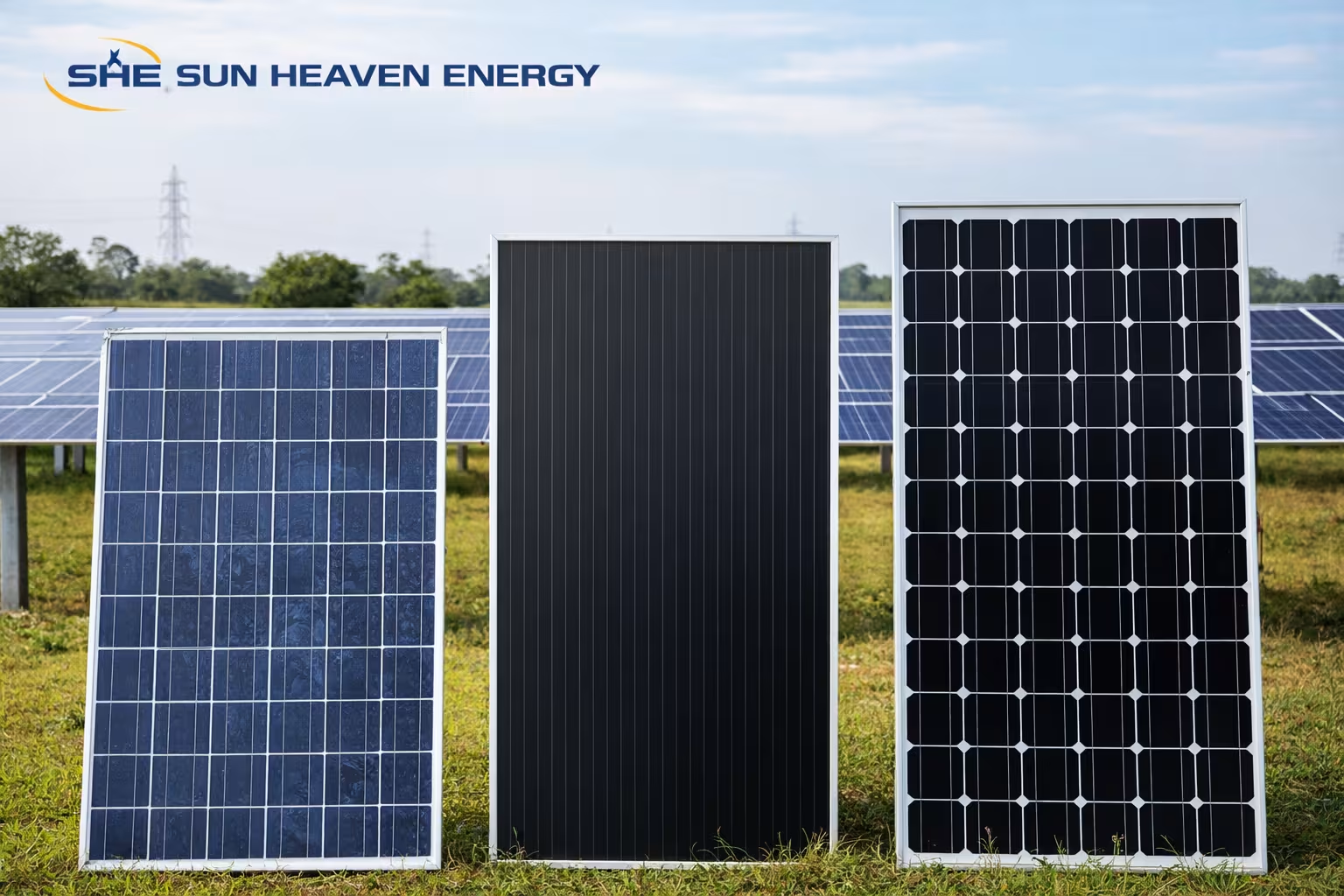
When planning a rooftop system, understanding the different types of solar panels is important because the panel you choose directly affects cost, efficiency and long term savings. In India, several solar technologies are available today, but only a few are commonly used in residential and commercial installations.
Most buyers today are choosing advanced monocrystalline based technologies because they offer better generation and space efficiency. Knowing the types of solar panels helps property owners make practical decisions based on rooftop space, budget and electricity needs.
Since panel technology keeps improving, understanding the difference between solar panel types and efficiency can help avoid wrong investment decisions. If you are planning installation, choosing the right panel type is one of the most important technical decisions.
Main Types of Solar Panels Available in India
Solar panels available in India can be classified based on the cell technology used. While many technologies exist globally, the following are the main panel types currently available in the Indian market.
Monocrystalline Solar Panels
Monocrystalline panels are currently the most widely used residential panels because they offer high efficiency and better performance in limited rooftop space. These panels are made from single crystal silicon which improves electricity generation per square foot.
Although they cost slightly more than polycrystalline panels, they are usually preferred for long term installations.
Polycrystalline Solar Panels
Polycrystalline panels were earlier very common because of their lower price. These panels are made from multiple silicon fragments and are slightly less efficient than monocrystalline panels.
Today they are mostly used in commercial projects where rooftop space is not a major constraint and budget is a priority.
Thin Film Solar Panels
Thin film panels are lightweight and flexible but are rarely used in residential rooftop installations because they require much larger space for the same electricity generation.
These panels are mostly used in large scale industrial or utility projects rather than homes.
Bifacial Solar Panels
Bifacial panels are an advanced technology that can generate electricity from both the front and rear sides. These panels are usually installed where reflective surfaces are available, such as industrial rooftops or ground mounted projects.
They are slowly becoming popular in premium commercial installations.
PERC Solar Panels
PERC (Passivated Emitter Rear Cell) panels are an improved version of monocrystalline technology. These panels include an additional reflective layer that improves electricity generation efficiency.
Many residential installations today use Mono PERC panels because they provide a good balance between cost and performance.
TOPCon Solar Panels
TOPCon (Tunnel Oxide Passivated Contact) panels are among the newer high efficiency technologies entering the Indian market. These panels improve efficiency further compared to PERC panels and are being adopted in premium installations where maximum generation is required.
HJT Solar Panels
HJT (Heterojunction Technology) panels combine crystalline silicon with thin film technology to improve efficiency. These panels offer high performance but are currently used mainly in specialised or premium installations due to higher cost.
Difference Between Major Solar Panel Types (Practical Comparison)
Understanding solar panel types becomes easier when comparing them side by side.
| Solar Panel Type | Efficiency | Cost Level | Space Requirement | Lifespan | Heat Performance | Best Use Case | Recommendation |
|---|---|---|---|---|---|---|---|
| Monocrystalline | 19–22% | Medium to High | Low | 25+ years | Very good | Residential rooftops | Best choice for most homes |
| Polycrystalline | 15–17% | Budget friendly | High | 25 years | Good | Commercial rooftops | Good if space is available |
| Thin Film | 10–13% | Varies | Very high | 20–25 years | Moderate | Utility projects | Rarely used for homes |
| Bifacial | 20–24% | Premium | Moderate | 25+ years | Very good | Industrial projects | Good for specialised setups |
| PERC | 20–23% | Medium | Low | 25+ years | Very good | Residential & commercial | Popular current choice |
| TOPCon | 21–24% | Premium | Low | 25+ years | Excellent | Premium residential | Future focused technology |
| HJT | 21–25% | Premium | Low | 25+ years | Excellent | High performance projects | Used in advanced systems |
From a practical buyer perspective, most residential installations today use Mono PERC or TOPCon panels because they provide better generation per square foot. Polycrystalline panels are still used where budget matters more than space efficiency.
Which Solar Panel Type Is Best for Homes in India?
Choosing between the different types of solar panels mainly depends on your property conditions and electricity needs rather than just technology preference.
From a practical decision point of view:
If your rooftop space is limited
Monocrystalline or PERC panels are usually better because they generate more electricity in less space. This improves savings when roof area is restricted.
If your goal is lower initial investment
Polycrystalline panels can reduce upfront cost, but they may require more space to generate the same electricity.
If you are planning long term savings
Higher efficiency panels like Mono PERC or TOPCon often provide better long term value because of improved generation and slower performance loss.
If electricity consumption is high
High usage households benefit more from efficient panels because better generation improves bill reduction.
If the installation is for commercial buildings
Polycrystalline or bifacial panels may be suitable where large rooftop area is available and cost optimisation is required.
In most modern residential projects, installers now recommend advanced monocrystalline technologies because they provide better efficiency and practical long term returns.
Conclusion
Understanding the different types of solar panels is important because the right choice directly affects how much electricity your system generates and how quickly you recover your investment.
While multiple technologies are available in India today, most residential installations are moving towards Mono PERC and TOPCon panels because they provide better efficiency and require less rooftop space.
From a practical perspective, the best panel is not the cheapest one but the one that matches your electricity usage, rooftop size and long term savings goals.
In simple terms, selecting the right panel type is a technical decision that should balance efficiency, cost and expected generation rather than just upfront price. A properly selected panel technology ensures your solar system performs reliably for the next 25 years and delivers consistent financial benefit.
Frequently Asked Questions
1. Which are the most commonly used types of solar panels in India?
The most commonly used types are monocrystalline, polycrystalline and PERC panels. Monocrystalline panels are widely preferred because they offer higher efficiency and better generation in limited space.
2. Which solar panel type has the highest efficiency?
Among common residential panels, monocrystalline and advanced technologies like TOPCon generally offer higher efficiency compared to polycrystalline panels. Higher efficiency means more electricity generation from the same rooftop area.
3. Are expensive solar panels always better?
Not always. Higher priced panels usually offer better efficiency, but the best choice depends on rooftop space and electricity usage. Large rooftops may work well with budget panels.
4. Which solar panel type is best for Indian weather conditions?
Most experts recommend monocrystalline based panels because they perform better in high temperatures and provide stable output. Polycrystalline panels also work well when space is available.
5. How long do solar panels usually last?
Most good quality solar panels installed in India come with performance warranties of around 25 years. While efficiency may reduce slightly over time, they continue generating electricity for decades.
6. How do I decide which solar panel type is right for my home?
Choosing between panel types depends on electricity usage, rooftop size and budget. A professional site assessment usually helps determine which panel type will generate the best savings.
Solar installers like Sunheaven Energy typically guide homeowners through this selection process based on technical feasibility.
7. Can Sunheaven Energy help me choose the right solar panel technology?
Yes, experienced installers usually recommend panel types based on generation potential, rooftop conditions and expected ROI. Companies like Sunheaven Energy evaluate sunlight exposure, space availability and consumption patterns before suggesting the most suitable technology.